Showing posts with label Брюгге. Show all posts

Saturday, 16 July 2016

Rural remains in Bruges.

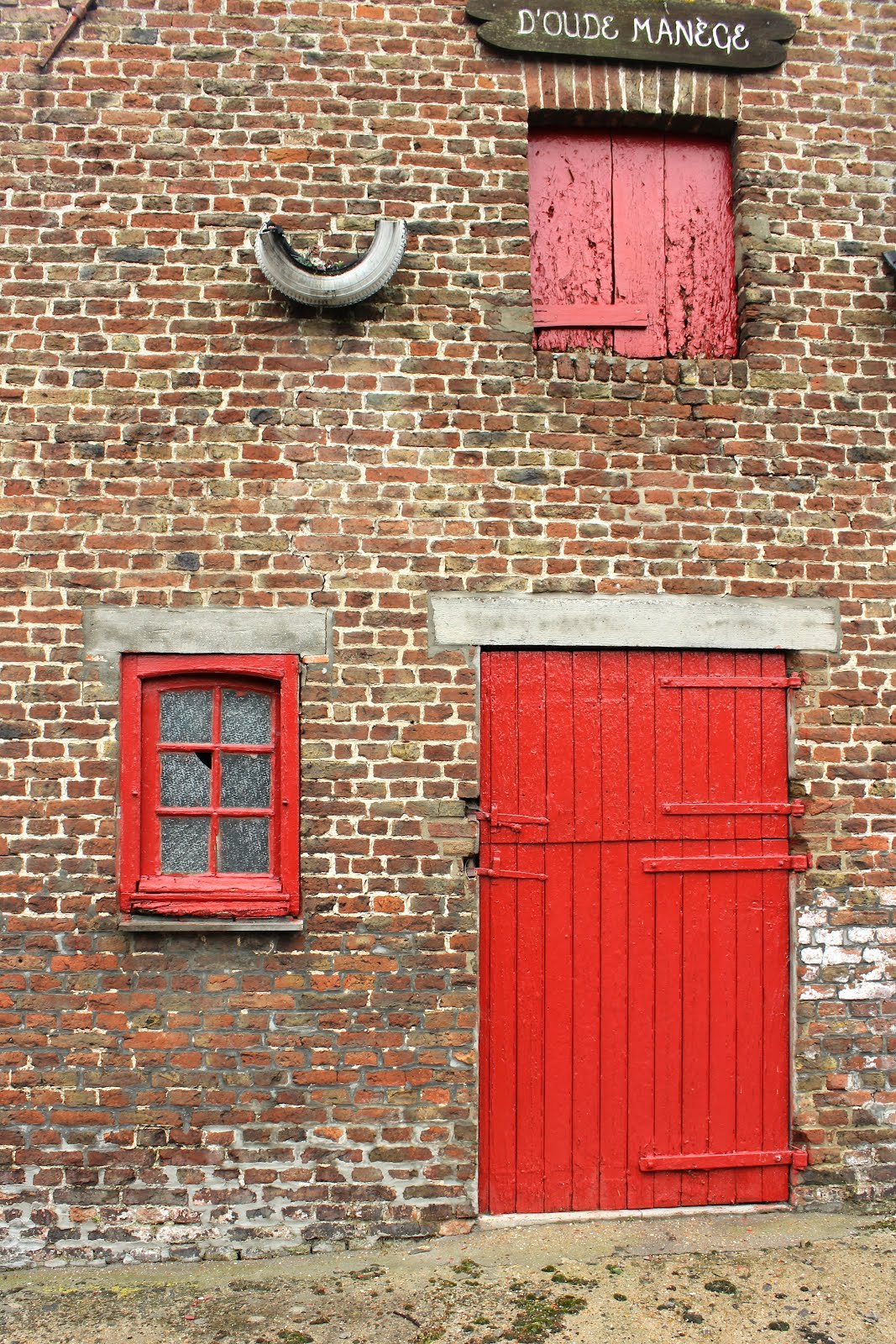
                                                               Colourful backdoor. Saint- Gilles, Bruges

Some parts of Bruges remained very rural until the second half of the 19th century. But the upcoming industry needed more and more labourers hence fields and meadows were replaced by rows of identical little houses. Old country roads and farmsteads remind us of a pastoral past.


Old farm buildings, Saint-Gilles

Bonne-Chière windmill, 1844.

St-Janshuis windmill, 1770

Old farmstead, Snaggaardstraat.


Wednesday, 8 October 2014

Kookeet 2014, a culinary experience II

It's nice to live in a regio with a gastronomy that belongs to the absolute world top. And every year it may show off its level during Kookeet, a festival of flavour and taste in the center of Bruges.
This year Kookeet found a new location on 't Zand, the ideal setting.


Several chefs, whether three stars or upcoming talent, gave -the often young- public the opportunity to enjoy their creations. And that for little money, compaired to what one normally pays in their restaurants.


Keeping some cutlery at hand!


Monday, 17 December 2012

Saint-Gillis


Some parts of Bruges still kept their rural character until today.
These old houses can be seen nearby the Saint-Gillis church. Saint-Gillis was once a small village, just outside the walls of Bruges. It kept its pastoral landscape of country roads, farms and meadows until the 19th century.
Visit this neighborhood on a summer afternoon, and enjoy many silent streets where you can often find souvenirs of Saint-Gillis' agrarian past.


Follow Me on Pinterest

Thursday, 13 December 2012


This shop in Gothic style was built in 1624. The original storefront can be seen in the sidestreet.
The building must be older, because former owner Adriaan Wouters Valyn got in 1623 a permit to replace the wooden front by the actual crow-stepped gable facade.
This lovely shop can be found in the Philipstockstraat, 33
Follow Me on Pinterest

Monday, 10 December 2012

Monday, 2 July 2012

The very old music shop.


Rombaux is an old but very beautiful music shop in the very heart of Bruges. My great-grandparents bought their gramophone records here and doña B. and I still pop in from time to time to browse their cd collection. Beside records they sell music instruments and sheet music.
Established in the 1920's, this place is a paradise for every music lover.Follow Me on Pinterest Stats

Wednesday, 27 June 2012

Begging for a cookie.


Follow Me on Pinterest

My favourite for a good cup of coffee.


Constructed in 1848, house "De Leeuw", houses nowadays a cosy tea-room. It has a charming patio, but one can have a coffee or a good glass of beer on their terrace that's overlooking Simon Stevin square. 
Follow Me on Pinterest

Friday, 9 March 2012

The " Vette Vischpoort".


Almshouse the "Vette Vischpoort" (Fat Fishgate) is one of the oldest in Bruges. Founded in 1434 in the Klaverstraat (Cloverstreet) by the families Fierens and van Leeuwerghem, it moved to the Moerstraat in 1618 (moer= wetland).
It lays in the shadow of the beautiful St-jameschurch and is discreetly hidden behind a massive wooden entrance gate. One of the houses desperatly needs some restauration but this small cobbled street with its little white houses kept its seventeenth century aspect very well. Seldom visited by tourists, this is a tiny oasis of silence.


View Larger Map

Tuesday, 6 March 2012

" In den Cleynen Thems ", a pharmacy throughout history.


This lovely house, just beside the Saint-Salvador cathedral, named "In den Cleynen Thems", was mentioned for the first time in 1484. It became a pharmacy in the late 17th century and is still the best place in town for pills and powders. The crow-stepped gable facade dates back to 1700 and the combination of red-painted brick and limestone is typical for Bruges. The statue on the corner is a recent work (1987) by the sculptor De Vlieghere, it represents a Madonna with child.
The present pharmacy is a modern one but the officina still contains a lot of 19th century elements, giving it a lot of character.
The staff is very friendly and professional. They are used to a cosmopolitan clientele and speak several languages themselves. If you have a headache in French, English or German... they supply you with the proper medication. Stats

Tuesday, 24 January 2012

Snellegem, a Merovingian Crown Estate.


Today I was one of the volunteers who had to drive schoolchildren to a neighbouring village, where they had to watch a stage play. While don G. and his friends had a good time realizing that cultural life is more then gaming, I payed a visit to a nearby place called Snellegem (Snelle's homestead).
This hamlet is nowadays a forgotten spot in the middle of nowhere, but has a long and dignified history. And a few interesting buildings to illustrate it.
In the 7th century the place became a Crown Estate, the "fiscus Snelleghem", belonging to the Merovingian dynasty, with a major or domesticus who lived on the central fortified farm, named "Ridderhof" or "Oosthof" (Knight's stead or East stead).
Today it's a restaurant and the oldest parts, like the entry gate, are dating back to the 15th century. A part of the rampart ditch is still visible, and the general aspect is that of a typical 17th century farm.
There is also a beautiful little Romanesque church, the Saint-Eligius church, built in 1150.
When the Merovingian king Dagobert I encouraged the christianisation of his kingdom, Saint Eligius of Noyon had -around 630- a wooden church constructed on the Royal Estate. It was dedicated to Saint-Stephen and was replaced during the 12th century by the actual church, with its octagonal tower.
In 1893 a mastodonic neo-Gothic church was built just beside the old one, completely spoiling the scenery. Locals told me that once a village priest wished the ugly thing to be pulled down. I presume he would have had good king Dagobert's support!


View Larger Map

Wednesday, 18 January 2012

La Iglesia del beguinaje de Brujas.


El Beguinaje principesco " Ten Wijngaerde" (el viñedo) fue fundado en 1244, pero las beguinas vivían allí con anterioridad. El lugar era una pradera fuera de las murallas de la ciudad. Margaretha II de Constantinopla, condesa de Flandes, fundó oficialmente el Beguinaje y el rey Felipe IV de Francia y de Navarra (el Hermoso) fue el patrón y protector del Beguinaje en 1299.
La primera Iglesia reemplazó la Capilla condal que se encontraba en el castillo. La capilla original está todavía en el Burg (fortaleza), próximo a la casa consistorial. Es la parte inferior de la Basilica de la Santa Sangre.
La Iglesia de la Santa Isabel de Hungría, patrona de las beguinas, fue destruida por un incendio en 1584. Reconstruida alrededor de 1600 en estilo gótico, se trata de una iglesia con tres naves y sin crucero que tiene todavía una puerta románica del primer edificio.
Un siglo más tarde se llevó a cabo su hermoso interior barroco.

Viva, my first attempt in writing Spanish! I hope it makes some people happy, there far away in good old Spain.
Visita el foro. Estamos esperando las reacciones iniciales.