Spanish people love social life, and often gather together in the local pub for a joyful evening. A good glass of wine, and some tapas, assure that the economic crisis and increasing uncertainties can be forgotten for a moment. The hard reality of daily life softens in the cerveceria, when you are in good company.
A mobile snack bar appears in the street and is immediately surrounded by a flock of people. It's a well known business in the regio, and the locals know their products are of outstanding quality. Quite necessary for a snack bar that goes by the name of "Health Pharmacy".
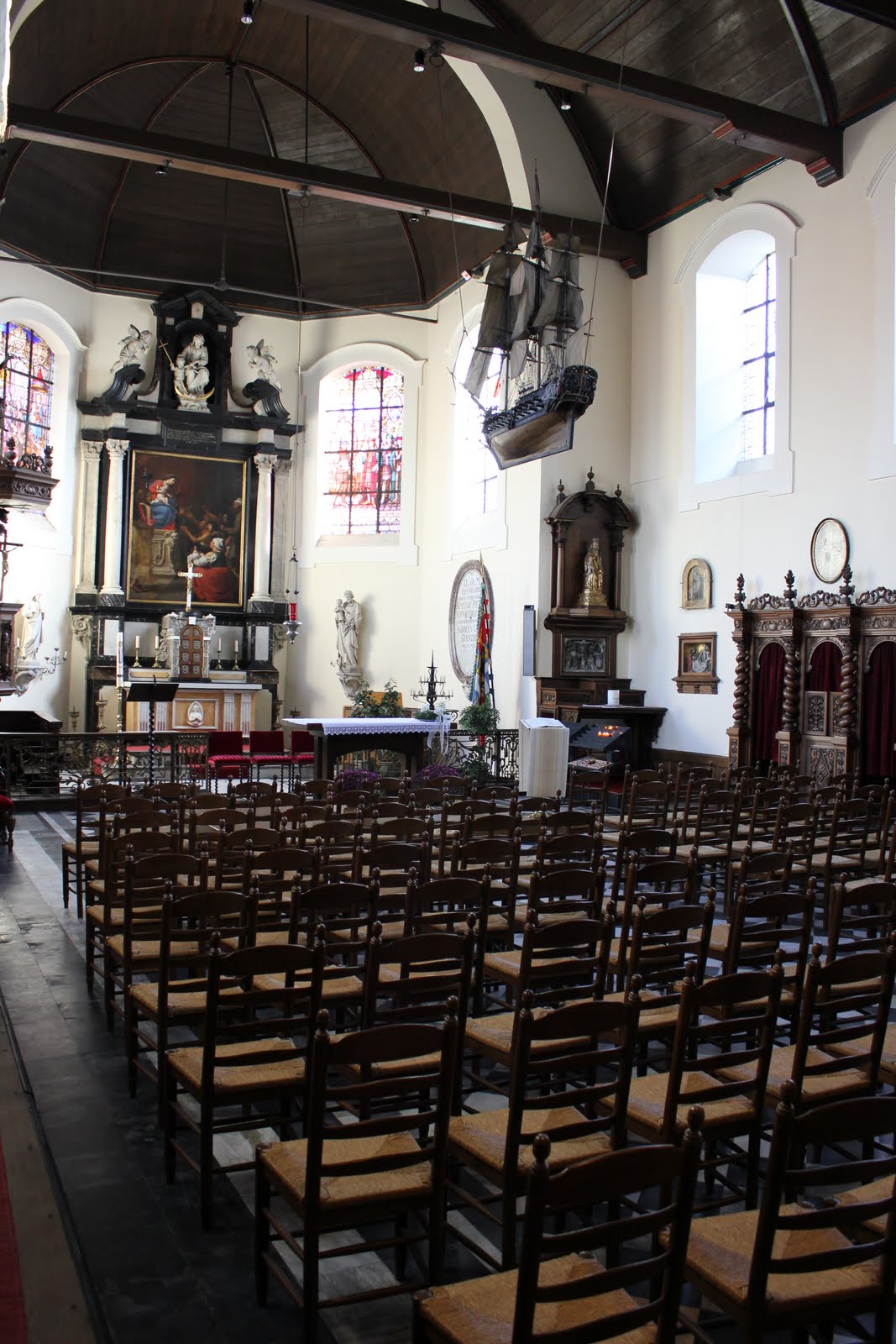
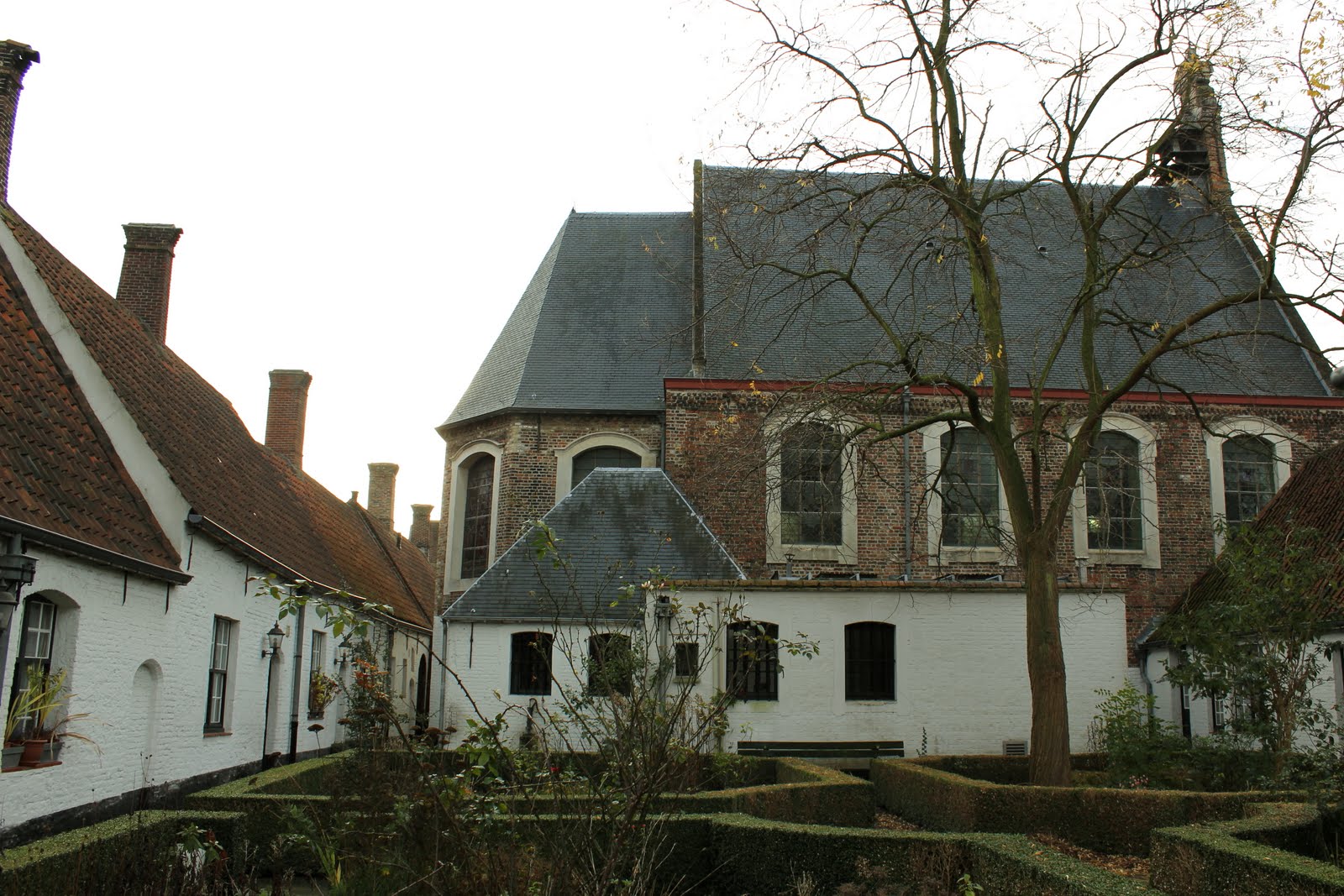
There is a second ship model in a chapel. In de Blindekenskapel (chapel of the Blind), in the Kreupelenstraat (street of the Cripples). The chapel belongs to the former almshouses for the blind, and is pictured in the post titled "Godshuizen". As there was a great shortage of food in 1588, the arrival of the "St-Andries",with it's cargo of grain, saved the citizens of Bruges from starvation. A model of the "St-Andries" hangs in the chapel since then.
Hidden between the canal Bruges-Ostend, and the railroad to the coast, is that most wonderful place. A scenery, that reminds the 17th century, displays itself before the eyes of the occasional bypasser. The canal -been dug during Spanish rule- and rows of majestic trees dominate the landscape, in which a modest chapel, and some old farms are located beside a manor house. Doña B. and I love this spot! The chapel is called "kapel van't Boompje", meaning "chapel of the Tree". It was constructed in 1664 by a nobleman, Andries De La Coste. His father was a Genoese merchant and as his mama's name was Livina De Valencia, I can only suppose he had Spanish roots too. The story goes that two seamen found a statue of Mary under a lime tree. It was brought to the local church, but appeared the next morning again under the tree. Since then, the spot is a place of pilgrimage for sailors and farmers. The ship model hanging from the ceiling is an ex-voto, donated in 1683 by some men whose ship survived a severe storm. Making ship models still had a purpose in those days.
From the 14th century onwards, rich people and corporations donated money to built houses for the needy. Eldery citizens, widows and the disabled found a home in those "Godshuizen"(almshouses). In general a dozen of them surround a courtyard, together with a chapel. Once the courtyard was used for cultivating a few vegetables. There was a public waterpump too, and some outdoor toilets. The name of the donator, or donating family, is often painted on the wall, together with the founding year, and -sometimes- a family coat of arms. The courtyards became nice gardens, and nowadays the almshouses are often oases of peace and rest, where retired residents still find a cosy home.